
.jpg)
Step onto a Runaway Road with author Sue Divin
With thanks to Clare ahll-Craggs at Macmillan Children's Books for suggesting this Q&A with Sue Divin and huge thanks to Sue for the insightful and thought-provoking answers I will leave you to discover more about the story and inspiration behind Runaway Road and to learn more about how a writer works in Sue's own words, responding to my questions. You'll find a review of Runaway Road over on the homepage of Armadillo Children's Books where it is Book O' the Week from 25th June to 1st July 2026.
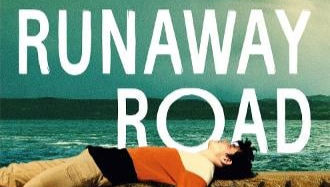
We live in a world that can be dark and challenging. Why not choose a lighter story for readers to escape with? It’s precisely because the world can be dark and challenging that I write stories like Runaway Road or my previous novels Guard Your Heart and Truth Be Told. Stories can shine a light into that darkness. Going beyond escapism and entertainment, they also have the power to make readers think. That spark of empathy triggered by fiction, can have a positive impact on how we understand and act in the real world, and that can make a difference.
Although the themes I write can be challenging, I also write with hope, humour and character. That sense of voice that lightens the mood and a fast-paced plot that keeps readers turning pages at night is also an important part of the mix. I love the drama of an emotional roller-coaster, but always with a glint of hope and a sense of purpose. That’s the kind of art I enjoy, whether books, songs or TV series and I don’t think I’m the only one! Perhaps stories are like wands, they find their owner/author. Not the other way around.
I’m always fascinated by stories set in places other than the one I live in (England). Does it help you to be familiar with the setting for your story, does it enhance the authenticity? Absolutely. Place is often like an extra character in my writing. I live in Derry~Londonderry in Northern Ireland. The north-west of Ireland has some spectacular scenery and locations.

The ‘Wild Atlantic Way’ features strongly in Runaway Road with its rugged and beautiful coastline. I walked most of the journey the characters travel in the novel – and my notebook came with me every step of the way. It’s filled with pages of rain-specked scribbles, random observations and sensory notes. I carry the characters in my head into each place and ‘listen’ to how they react to the surroundings. Much of Ezra and Evie’s narrative comes straight from that notebook!
Runaway Road is a very realistic story. Does that make it even more important to you, when writing, to be thorough in your research and accurate in the facts you present? Runaway Road was the first novel where I deliberately chose to write ‘beyond’ my own experiences. Learning how to research was a challenge I threw myself for this third book. Whilst the story is fiction, I made a point of talking with people who worked in real life youth justice, fostering and policing. Online research was also vital. The more accurate the setting, the more real the story will be. Often, it’s the little details that make something come alive, like Ezra wearing socks on his hands, not gloves, for the initial break-in robbery, or the events that happened at the Black Lives Matter protest in Derry.
Family bonds and friendships are very important in this story. Why was it so important to you to emphasize these very different bonds? The bond between Ezra and Evie is the beating heart of this novel. Runaway Road is also a quest to find belonging and family. A place to fit in.
My first novel, Guard Your Heart was a Romeo and Juliet set in Derry in 2016. A ‘boy-girl’ romance dynamic. Truth be Told was more a friendship/quest dynamic. In Runaway Road, I deliberately chose a sibling relationship to be at the core. Ezra’s friend, or maybe more than friend, Alannah, brings to light the important of true friendship. She’s a powerful addition to the cast – a sassy, intelligent, independent thinker who is prepared to challenge as well as support Ezra in his complex situation and counterbalance his impulsivity.
I was blessed to be brought up in a wonderful family, but there are over 4000 children in the care system in Northern Ireland (and many more elsewhere). Finding good friends, positive adults, foster families or adoptive parents can be critical to their life experiences. Characters like Rob and Sarah demonstrate just how significant that can be.
Have you ever personally experienced, or do you know anyone who has, anything like the challenges Ezra faces and if so was this the inspiration for the story? Specific to Ezra’s experience in care or with youth justice, no. That required research.
However, there are aspects of this story, other characters, which are much closer to my personal and family experiences. My mother is registered blind through macular degeneration, so writing the elderly lady required little research. I’ve also direct experience of ASD / neuro-diversity in my immediate family. That was definitely the inspiration for writing Evie. I wanted to put a positive representation of neurodiversity on the page. To show how wonderfully creative, observational and intelligent a young person with ASD can be as well as how certain circumstances can be complex for them. I also think there is limited, non-stereotypical, representation of Northern Irish-British identity in literature. Having the characters from that identity was deliberate and arose specifically from voices of people I know from within that community.
The real inspiration came from the ‘Amazing Grace’ connection with John Newton (slave-trader turned abolitionist) who had his near-death conversion moment is a storm at sea just off the coast of Donegal. It made me think about second chances. The original working title of Runaway Road was I Once Was Lost, from a line in the song Amazing Grace. Being given a second chance allowed John Newton the chance to change and that made a huge, positive difference. How do we view Ezra? Do we give young people today that space, that grace, to change?
Ireland and Northern Ireland have a contentious history. Have you experienced both sides of the border and are they very different? I think the UK and Ireland have a very contentious history, and Northern Ireland is the result of that. How we talk about the border is also interesting – the Irish border, The Northern Irish border, The British border in Ireland...

Writing these responses, I’m sat at a desk upstairs in my home in Derry~Londonderry on the Northern Irish side of the border. Out my window, in the distance, I can see An Grianán Fort and Donegal on the Republic of Ireland side of the border. It’s only 5 minutes’ drive. Aside from travelling, and a few years in England and France, I’ve lived all my life in Northern Ireland and am regularly ‘across the border’ in the Republic of Ireland. Life either side of the border is both similar and different simultaneously - you’ll get a different perspective on this depending on the identity and life experiences of who you talk to.
On one level, the border is almost invisible. I cross into Donegal regularly to meet friends for a coffee or a scenic walk. As Ezra points out in Runaway Road, it’s blink-and-you-miss-it, a change of road markings and signage, but no border control. The border in the north-west is very fluid, a ‘people’ border crossed daily by commuters, shoppers, day-trippers. On the other hand, crossing the border means different currency, different government and services and engaging with different identity dynamics and experiences of conflict. Northern Ireland is a post conflict society. A place where you can hold either or both British and Irish passports. A place, particularly since Brexit, where political and identity questions and tensions ripple under the surface. I chose to write Runaway Road in a cross-border setting to capture some of those topical issues through the characters and narrative. The question of the border is pertinent to future thinking on all of these islands.
When writing such gritty realism what do you do when you need a break to wind down or switch off temporarily from the story? I love to swim, walk or play music and I find it’s really important to have good friendships and relationships in life’s journey. My life is busy. It can be a struggle to keep a good work-life balance. I work a 4-day week in a different job to make ends meet, and I’m a single-parent, so there’s plenty to take my mind away from writing. I also volunteer, playing music in my local church and coordinating a writing group in the library. The problem, more often than not, is not how to take a break from writing, but how to switch ‘on’ to the story and focus on it!
When you write do you have an audience in mind? Are you thinking of the characters and getting their story right or is it the readers who might see themselves, people they know in the story? The characters, their voices and their journey are at the forefront in all my writing. With my first novel, I had no idea if anyone would ever get to read it, but I still wanted to write it. With Runaway Road, there was also no guarantee it would get published. (I’m delighted it did!) I suppose though, I do write in the hope that readers beyond Northern Ireland can get a sense of the place beyond the negative stereotypes and to see some universal themes in the local setting.
My writing process is more to look around me and sense what the big issues are at the time which are resonating with me. To think what questions might reach forward from these into the future. Sometimes the stories come from my brain musing and processing these topics and thinking how those could play out in someone’s life. What is the story behind the issue?
I’m striving to create empathy and connection. Sometimes that will mean readers seeing themselves represented in fiction (I’ve experienced Northern Irish teenagers saying they feel ‘seen’ for the first time in literature after reading my novels or those of other contemporary YA NI authors) but sometimes it will mean creating an emotional connection with characters who are ‘different’ to the reader too. Take Evie as a character from Runaway Road. She’s a little powerhouse of positive representation for neurodiversity. For some readers, that’s new. For some readers, that’s their life experience.

What, for you, are the most important factors to account for to write a good, deep, meaningful story? Honesty, integrity, authenticity. It’s also important that the story is written well. That plot, pacing, voice, character, humour and all the ingredients that go into stories work together. There will always be a sense of journey, whether physical, emotional or both (as in Runaway Road). A sense that the reader can grow and travel alongside the protagonist(s).
Drama and dialogue are also drivers in my writing – there should be key pivot points where things can swing different directions and layers in terms of what the story is about. Leaving the space in between the lines, the things that are unsaid, those are critical to engaging the reader’s imagination. Readers are intelligent. They like to piece it together for themselves, pick up the breadcrumbs along the way and make their own mind up at the end. A good story will live in the reader’s head long after they close the final page.
Will you continue to explore gritty, chilling reality and situations, such as Ezra’s or will you move onto a different theme? What are the stories you feel you’d like to tell or need to be told? I’m not sure I’d say ‘chilling’. There is a kind of contemporary redemption or hope in most of my writing, despite being set in a gritty context.
Where I go next is an open question. The random ideas currently in my head (and scribbled in that notebook) are a quite different trajectory to the first three novels. One is YA dystopian. Another is middle-grade. Another is adult fiction. For the moment, I’m just delighted to have Runaway Road published and to see the journey that it travels. Perhaps the next story will find me along the way.
Runaway Road, by Sue Divin is out now, published by Ink Road (Macmillan Children's Books)


Comments