
.jpg)
Space: The Final Frontier
Many readers of a certain age will recognise this title as part of Star Trek’s opening monologue. I’ve always been fascinated by space – the TV shows, films and books set in space, the brave real-life explorers who have ventured beyond our atmosphere and the sheer majesty of the night sky. But the Moon holds a particular place in my heart because it appears bigger and more accessible than anywhere else out there. And that’s why I think it makes the perfect setting for my latest book, Moonlight Robbery, an exciting adventure for 9-13 year-old readers.
Formed when two similar-sized proto planets smashed together, the Moon is the largest satellite, relative to its planet, in the Solar System. Its gravitational pull drives the ebb and flow of our tides. A full moon turns mythical lycanthropes into vicious creatures and is said to drive some people mad, hence the derivation of ‘lunacy’.
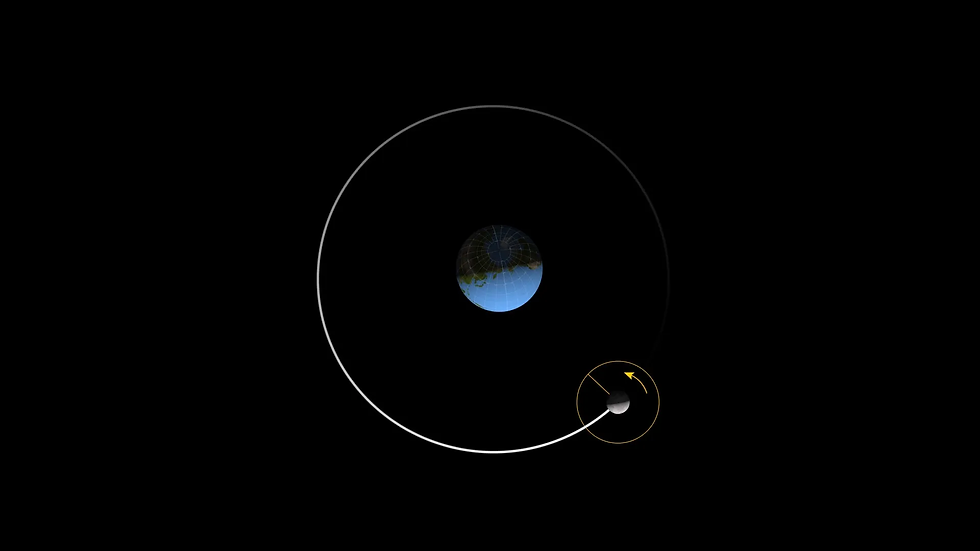
It spins on its axis at exactly the same frequency as it orbits the Earth (a phenomenon known as tidal lock), meaning we only ever see the same hemisphere from the surface of our planet. The dark side of the Moon isn’t without light – it simply remained a mystery to humans until we figured out how to launch rockets to its far side and beam back pictures of that pock-marked surface, lacking in the smooth lunar plains, or seas, of the nearside.
The Moon is 400 times smaller than the Sun but also 400 times closer, so during a total eclipse (something due to happen later today across Europe as I write this), we are left with a beautiful view of the Sun’s wispy corona. I could go on… but the point is I am beyond excited to think that within my lifetime we might finally establish a permanent base on the Moon. That thought has driven two of the books I’ve had published: Rose Gold in 2018 and this year’s Moonlight Robbery which combines elements of Space 1999, Ocean’s 11 and Oliver Twist. That might sound like a bizarre mix, but it does make sense as a page-turning adventure, I promise! More on this later…

Growing up, I loved TV series like Star Trek, Space 1999, even the old black-and-white adventures of Buck Rogers and Flash Gordon at 6pm on BBC2. A story just seemed so much bigger when it could encompass the whole universe. Star Wars was a big leap forward in the scope of storytelling and visually stunning effects that could be achieved in space. But I also adored the mystery of films like Close Encounters and 2001: A Space Odyssey, not to mention the scare-fest of the Alien franchise, once I was a bit older.
I had a pretty big collection of space-themed Lego and enjoyed building bases and rockets out of those little grey bricks (some of which my daughter has now inherited). I even had a rocket launch pad set from the 1970s that pre-dated the iconic 1980s space sets. I guess there were plenty of signs from my childhood that my imagination loved science fiction. A Fall of Moondust, the book by Arthur C Clarke, took me to the surface of the Moon and imagined a fully-fledged tourist industry there. How I would love to experience that before I shuffle off this mortal coil, though perhaps without the catastrophe that befalls the dust-cruiser Selene in Clarke’s story!
As somebody interested in geopolitics and a student of economics, I’m curious to see how we as a global society handle the potential for mining resources from the lunar surface, something brilliantly portrayed in the 2009 movie, Moon, starring Sam Rockwell. Is this going to turn into a Californian Gold Rush, a hybrid arms race between the USA and China or some sort of Utopian sharing zone?

The dangers of living on the surface, from solar radiation, micro meteorites and extreme temperature swings would be mitigated by building a submerged base near the Moon’s polar regions. Since the South Pole has a plentiful supply of ice, it seemed the logical location for the Pitadel – the setting for Moonlight Robbery.
The Pitadel is a city built around a naturally formed giant tube caused by a lava eruption when the Moon was volcanically active. It’s almost like an inside-out tower block from Mega-City One, the setting for Judge Dredd’s many adventures, with the doughnut shaped levels centred around the original lava tube and stacked one on top of the other. Just like in Mega-City One, boredom for the residents leads to the sport of Jetpack racing and drone-surfing to enliven a difficult existence. Mirrors reflect and magnify the constant, weak sunlight down into the heart of the metropolis.

The highest levels of the Pitadel are the brightest and least crowded so that’s where the richest citizens and the authorities reside, of course, ruling with an eye on profits and coercion. Utopian societies are no friends to peril and adventure! The story is based around a twelve-year-old orphan called Max who lives with his cruel uncle and aunt at the top of the Pitadel until a wicked act sees him plummet to the very depths of the city. There he is rescued by Art, a member of a group of illegal urchins who use their street-smarts to stay alive under the careful watch of their guardian Quintan, who might sometimes ask them to pick a pocket or two 😉
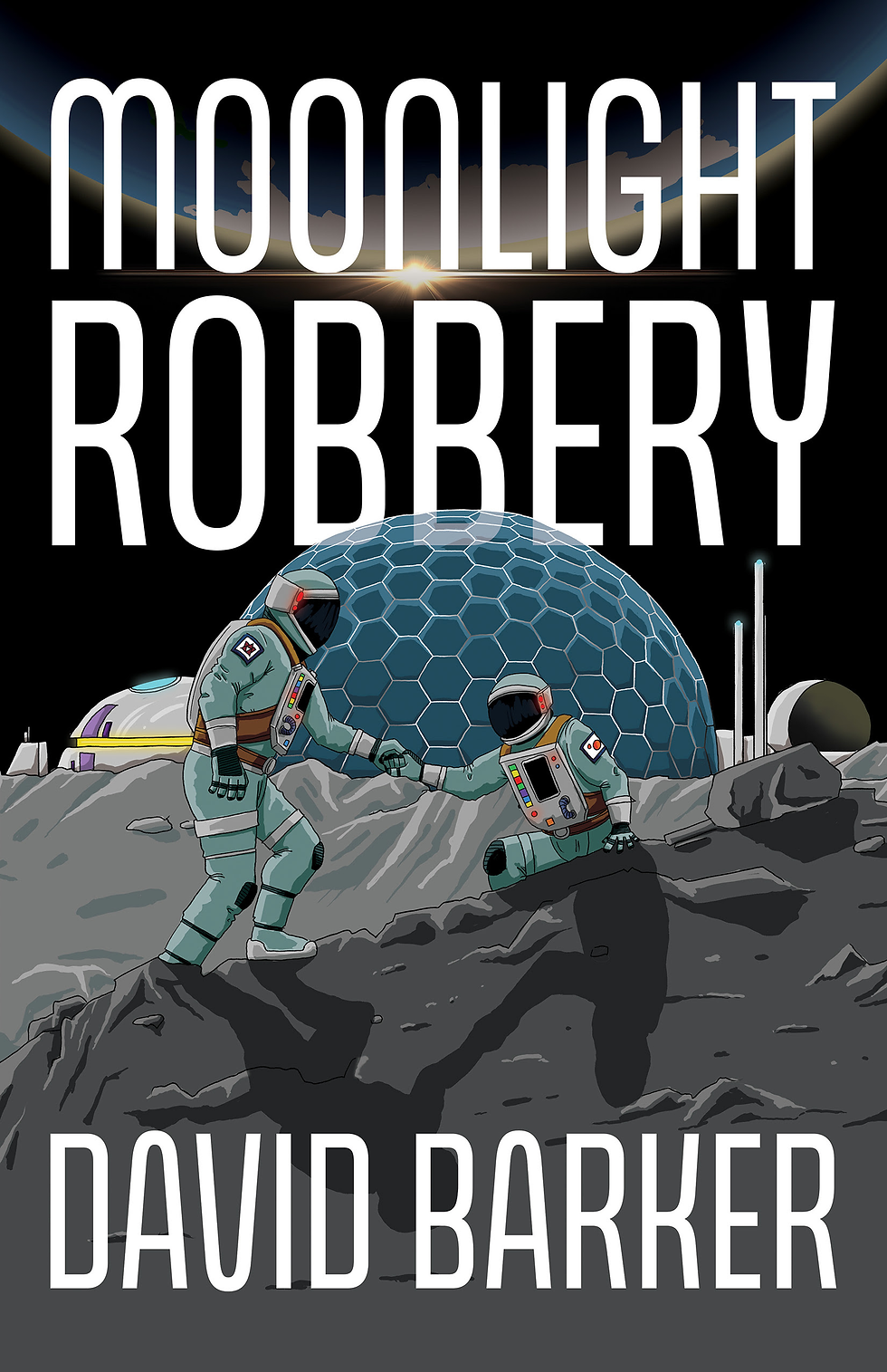
Max copes with his troubled childhood by sticking to a rigid set of forty-three rules, which includes never breaking the law. But he realises he is being robbed of his inheritance, just as Art is captured by the police and he is forced to take part in an ambitious heist. Max must come up with a daring plan by breaking his own rules to pull off the impossible: rescue Art, foil the heist and claim his rightful legacy. I can’t wait to show you how it’s done…
And next time you’re out on a clear night, away from streetlights, don’t forget to look up and imagine what it would be like travelling through that inky void towards a lunar city. You might just find yourself on a breathtaking adventure!


![How to be [undead] and enjoy pizza!](https://static.wixstatic.com/media/0ad8b8_a37d285cb28844ee9d7b46707437364a~mv2.jpg/v1/fill/w_651,h_360,fp_0.50_0.50,lg_1,q_30,blur_30,enc_avif,quality_auto/0ad8b8_a37d285cb28844ee9d7b46707437364a~mv2.jpg)
![How to be [undead] and enjoy pizza!](https://static.wixstatic.com/media/0ad8b8_a37d285cb28844ee9d7b46707437364a~mv2.jpg/v1/fill/w_152,h_84,fp_0.50_0.50,q_90,enc_avif,quality_auto/0ad8b8_a37d285cb28844ee9d7b46707437364a~mv2.jpg)


Comments